Male Infertility and Acupuncture: A Supportive Role
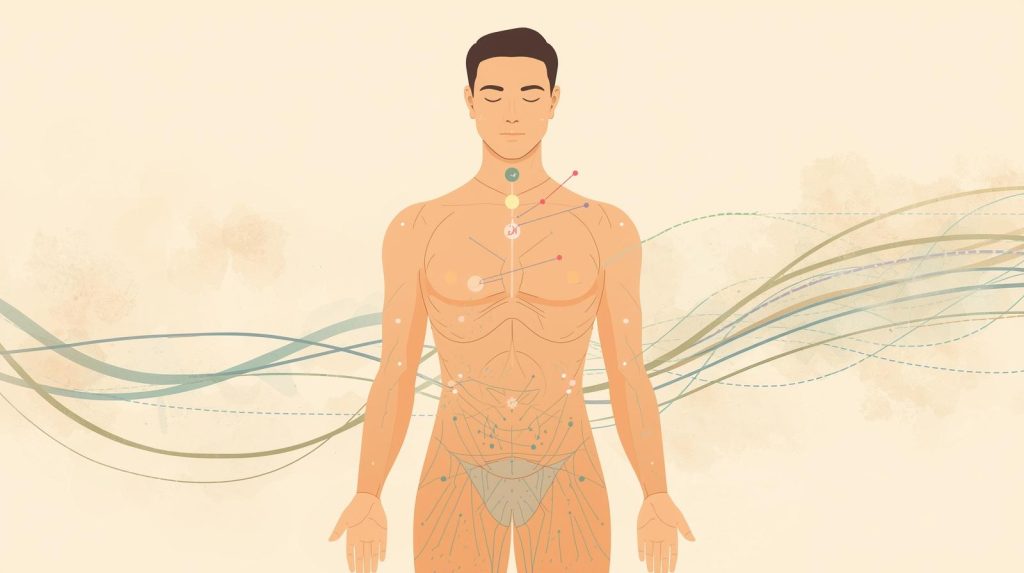
Male Infertility and Acupuncture: A Supportive Role
When couples experience difficulties conceiving, attention often focuses on female reproductive health. However, male
factors contribute to infertility in a significant proportion of cases. For some men, this can feel isolating or
overlooked. Acupuncture is sometimes considered as a supportive therapy within a wider fertility plan, and this
article explores what is currently known.
Understanding male infertility
Male infertility may involve reduced sperm count, poor motility, abnormal morphology, or increased sperm DNA
fragmentation. These factors can be influenced by genetics, medical conditions, lifestyle, environmental exposure and
stress. A full medical assessment, including semen analysis and hormonal testing, is always essential.
What does research suggest about acupuncture?
Several small clinical trials have explored whether acupuncture might influence sperm parameters. Some studies have
reported improvements in sperm motility and morphology following regular acupuncture treatment over several weeks
(Siterman et al., 1997; Dieterle et al., 2009). These findings have led to interest in acupuncture as a possible
supportive therapy.
Why timing matters
Sperm development takes approximately two to three months. Any intervention aiming to influence sperm quality —
whether lifestyle changes or complementary therapies — must take this timeframe into account. Where acupuncture is
used, treatment courses are often planned over several months to align with spermatogenesis, although this approach is
based on biological reasoning rather than definitive clinical evidence.
A broader view of support
Even where direct effects on sperm quality are uncertain, acupuncture may still play a valuable supportive role. Many
men report improvements in stress levels, sleep, energy and overall wellbeing. Given the known links between chronic
stress, hormonal regulation and reproductive health, these effects should not be dismissed.
A balanced approach
Male infertility can be challenging, both physically and emotionally. If acupuncture is considered, it should be with
clear expectations: not as a cure, but as part of a holistic approach that supports wellbeing while medical pathways
are explored.
If you would like to talk about how acupuncture might fit into a broader fertility support plan, you are welcome to
contact York Traditional Acupuncture. Call 07788 633292 or email info@yorktraditionalacupuncture.co.uk to arrange a
consultation.
- Siterman, S., Glezerman, M., Koifman, A., Albagli, O., Bukovsky, I. and Flam, K., ‘Effects of acupuncture on sperm
parameters of males suffering from infertility’, Fertility and Sterility, 68.2 (1997), pp. 291–295. - Dieterle, S., Schimke, I., Yoon, S.Y., et al., ‘Acupuncture in patients with semen abnormalities: a randomized,
controlled trial’, Andrologia, 41.2 (2009), pp. 95–101. - Huang, W., Calvert, J., Johnson, D., et al., ‘Acupuncture for male infertility: systematic review and
meta-analysis’, Journal of Urology, 189.4 (2013), pp. 1398–1404. - Wong, W.Y., Merkus, H.M., Thomas, C.M., et al., ‘Male factor subfertility: definition, investigation, and
intervention’, British Medical Journal (BMJ), 332.7535 (2006), pp. 1259–1263. - Jung, J.H., Kim, S.J. and Lee, J.H., ‘Effects of acupuncture on sperm quality and circulating reproductive hormone
levels in subfertile men: a systematic review’, Complementary Therapies in Medicine, 23 (2015), pp. 357–369. - Carson, S.A. and Kallen, A.N., ‘Diagnosis and management of infertility: a review’, JAMA, 323.2 (2020), pp. 208–220.
- Esteves, S.C., Miyaoka, R. and Agarwal, A., ‘An update on the clinical assessment of the infertile male’, Clinics,
71.4 (2016), pp. 197–204. - Agarwal, A., Mulgund, A., Hamada, A. and Chyatte, M.R., ‘A unique view on male infertility around the globe’,
Reproductive Biology and Endocrinology, 12.37 (2014), pp. 1–9. - Bobjer, J., ‘Spermatogenesis and the impact of external factors: clinical implications’, Scandinavian Journal of
Clinical and Laboratory Investigation, 78.6 (2018), pp. 447–453.